


Summary Overview
Supplement marketing compliance is the discipline of ensuring that the complete customer journey, including landing pages, product pages, email, social posts, affiliate assets, reviews, and checkout copy, presents claims that are truthful, appropriately qualified, and supported before they are published. A durable program is not a last-minute legal review. It gives teams a shared claim inventory, evidence standard, approval path, and process for spotting implied claims that can create risk even when a sentence looks harmless in isolation.
- Review the net impression of a claim, not only the exact words on the page.
- Maintain claim-specific evidence and approval records before an asset is distributed.
- Apply the same standards across product pages, advertising, affiliates, reviews, and lifecycle email.
- Use a repeatable review workflow so speed does not depend on memory or one person’s judgment.
Supplement brands should manage compliance as a pre-publication workflow that maps every health-related claim to its evidence, checks the overall consumer impression, and routes high-risk language through an accountable review step. This approach helps teams publish persuasive content without treating compliance as a last-minute copy cleanup exercise.
What supplement marketing compliance means in practice
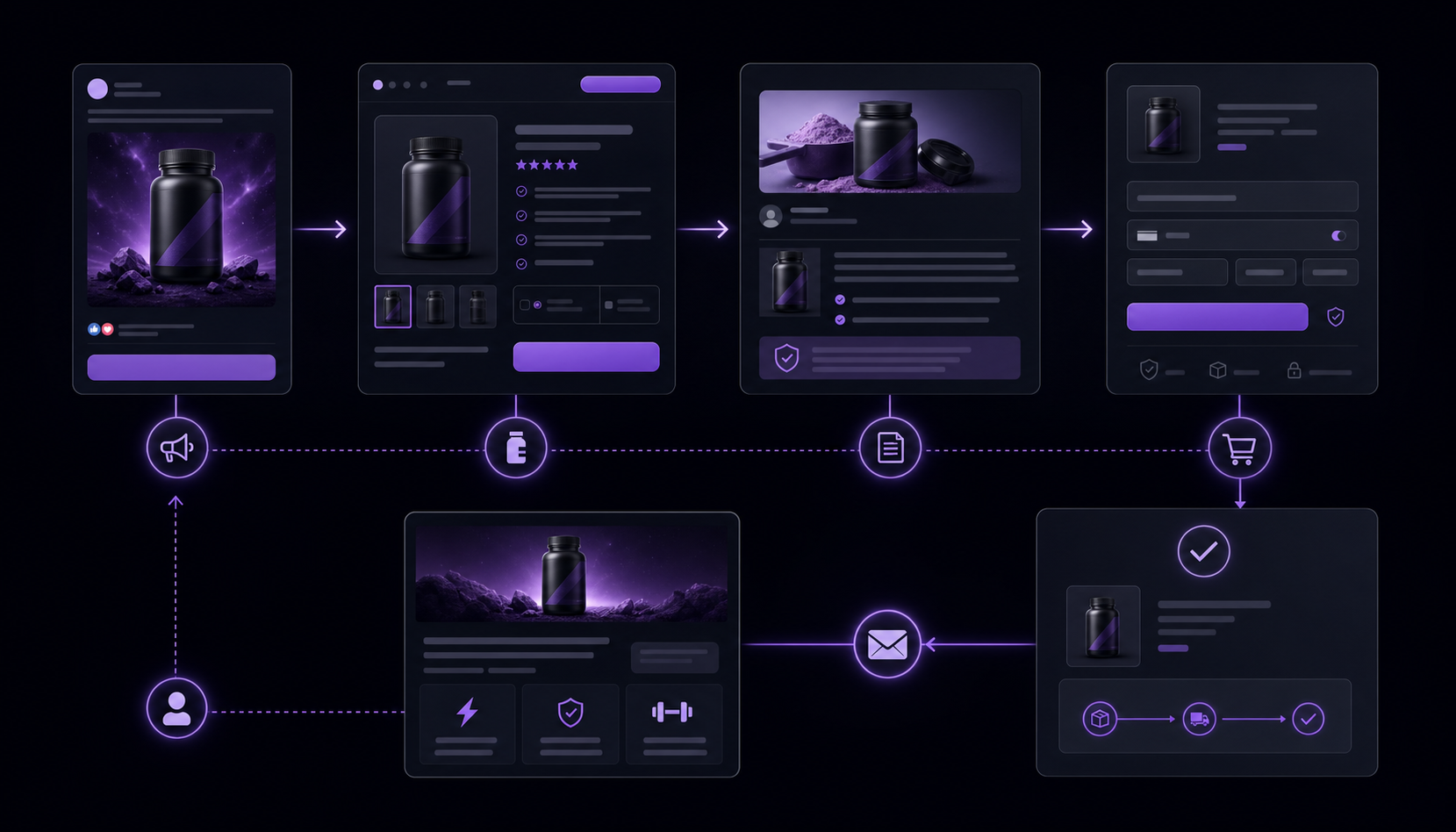
For growth-focused operators, supplement marketing compliance is not a legal afterthought. It is an operating system that spans creative briefing, copywriting, asset assembly, approvals, and post-publication monitoring. The goal is consistent, truthful, and appropriately qualified claims across the full journey: ads, landing pages, product description pages, social content, emails, SMS, influencer and affiliate placements, reviews, and checkout prompts. The Federal Trade Commission expects health-related advertising to be truthful, not misleading, and supported by competent and reliable scientific evidence before dissemination. That expectation applies to express and implied claims. (FTC health products compliance guidance)
Compliance is not about writing the blandest headline. It is about aligning the promise you make to consumers with evidence that matches the product, the audience, and the way the claim is communicated. The FTC’s policy on advertising substantiation requires a reasonable basis for objective claims before an ad runs. Teams that cannot show their basis risk enforcement and disruption at the worst possible time, such as during a major promotion. (FTC advertising substantiation policy)
This guide is practical marketing guidance for operators and content leaders. It is not legal advice. Work with qualified counsel to resolve gray areas and to set evidence standards for your category and products.
The customer journey is the compliance surface: Map where claims appear and why teams need one source of truth for approved language
Claims appear everywhere consumers form an expectation. Treat each touchpoint as part of the same promise. A landing page headline that promises faster recovery, a PDP bullet that lists benefits, a creator’s reel that implies relief from a named condition, a UGC carousel showing dramatic before-and-after photos, an email subject line touting a fix by Friday, a checkout banner that nudges with a health benefit, a subscription churn win-back that hints at disease prevention: all of these help shape the net impression of what the product does. Under FTC health claims guidance, regulators evaluate the overall impression that a reasonable consumer would take from the ad, not just isolated phrases. A brand’s review process needs one source of truth for approved claims and qualifiers so that the message is consistent wherever it shows up. (FTC health products compliance guidance)
Map the journey as a living inventory. For each SKU and campaign, list paid ads, organic social posts, email flows, landing pages, PDPs, affiliate placements, creator posts, and checkout or cart modules. Link each asset to the claims it contains. This map becomes the backbone of your supplement compliance workflow because it connects what is said to where it lives and who owns it.
Claims, evidence, and consumer impression: Explain the relationship between a claim, its support, qualifiers, visuals, and the likely interpretation of a reasonable consumer
A claim is not only a sentence. It is the sentence, the imagery, the context, the qualifiers, and the surrounding copy that shape what a reasonable consumer believes. The same words can shift in meaning when paired with a white coat, a stethoscope, a hospital corridor, a chart that looks like a medical endpoint, or a testimonial about remission. Your review must therefore connect claim text to evidence, then test the net impression of the complete asset. The FTC expects that advertisers have competent and reliable scientific evidence for health-related benefits and safety, and that disclosures or qualifiers are clear enough to change the overall impression when needed. (FTC health products compliance guidance)
Know the claim categories before writing copy
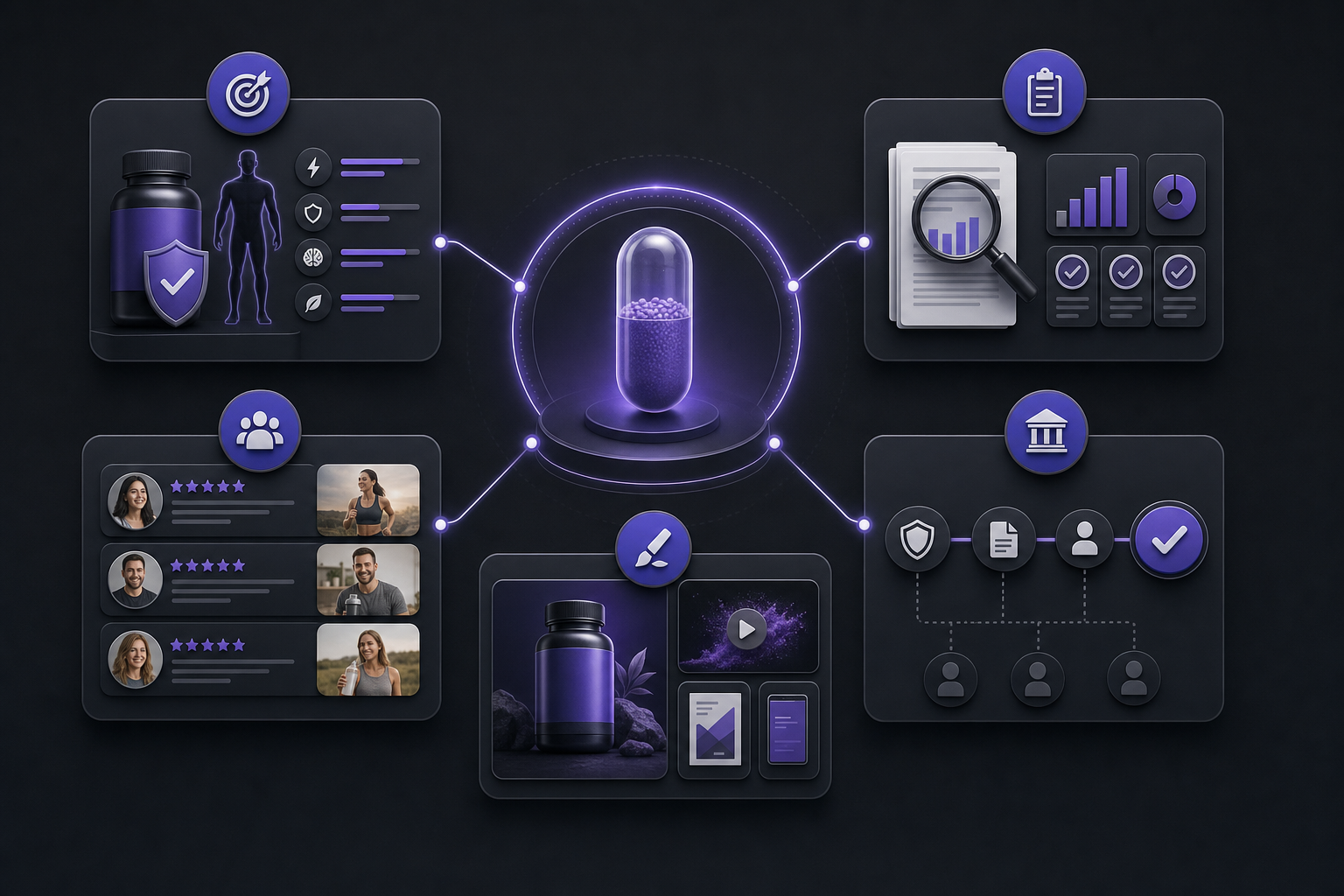
Writers and performance marketers need a shared vocabulary. Not every claim calls for the same type or level of substantiation. Before creative work begins, define the categories you will encounter and the matching evidence expectations. The categories below give teams a fast way to tag copy and route it to the right level of review.
Structure or function language versus disease language: Use the FDA distinction carefully and explain why marketers must validate final product-specific language with qualified counsel
Structure or function claims describe the role of a nutrient or dietary ingredient intended to affect the structure or function of the body. They cannot claim to diagnose, mitigate, treat, cure, or prevent a disease. For dietary supplements, these statements do not require preapproval, but the manufacturer must have substantiation that the claim is truthful and not misleading, and must submit a notification with the text of the claim to FDA no later than 30 days after marketing the supplement with the claim. The required disclaimer must also appear in labeling when such claims are used. Work closely with counsel to ensure your final language and placement meet these conditions. (FDA structure/function claim guidance)
Disease claims, by contrast, are statements that explicitly or implicitly reference diagnosis, mitigation, treatment, cure, or prevention of a specific disease. Context can turn a neutral phrase into a disease claim. Pairing a supplement with images or testimonials about a named disorder, or referencing drug-like endpoints, can create a disease implication even without using proscribed words. When in doubt, route for legal review early and adjust the creative strategy so that your product-benefit story remains truthful, non-misleading, and appropriately qualified. The FTC’s focus on truthful, substantiated health-related advertising applies regardless of whether the FDA would categorize the product as a supplement, food, or drug, so your team must align to both frameworks. (FTC health products compliance guidance)
Testimonials, before-and-after stories, and endorsements: Explain why reviews and creator content require the same governance as brand-written claims
Testimonials and endorsements are not compliance escape hatches. If a consumer or creator communicates a performance or health benefit that the brand cannot substantiate, the brand may still be responsible for the net impression. Your governance should require that testimonial content reflects typical, expected results unless you clearly disclose the generally expected performance. It should also ensure that creators and affiliates use only approved phrases for structure function claims and avoid disease implications. The reasonable basis rule applies to implied claims in endorsements and testimonials as well as to your own copy. (FTC advertising substantiation policy)
Implied claims and risky creative context: Show how headlines, visuals, expert imagery, urgency, and qualifiers can change the meaning a consumer takes away
Small creative choices carry big risk. A headline that says feel better fast may be acceptable when supported and properly qualified, yet the same headline next to a visual of a prescription bottle and a hospital bed can imply drug-like treatment. Urgency language can also shift meaning. Promise relief in hours and you may be making a time-bound performance claim that requires evidence tailored to that timeframe. If your landing page uses a doctor-patient motif, add clear context about why that expert is featured and avoid clinical endpoints unless supported. The FTC evaluates the net impression of the ad as a whole, which means visuals and layout matter as much as the words. Build a habit of reviewing the entire asset for what a reasonable consumer would take away, then adjusting disclosures or creative to ensure truthfulness and clarity. (FTC health products compliance guidance)
Build a claim-review workflow that teams can actually use

A compliant program that slows launches to a crawl will be ignored when pressure mounts. The answer is a lean, auditable workflow that ties each material claim to its evidence, assigns ownership, distinguishes fast paths from escalations, and tracks approvals by asset. Think of it as a claim ledger plus a structured review. The FTC expects a reasonable basis before dissemination, so your workflow must produce that basis as a repeatable outcome, not as heroic effort during a fire drill. (FTC advertising substantiation policy)
Step 1: Create a claim inventory
Start with a claim inventory that enumerates every material promise across high-traffic, high-spend, and high-vulnerability assets. A material claim is any assertion likely to affect purchase decisions, including express and implied benefits related to health, safety, performance, or efficacy. For each SKU or bundle, list:
- Claim text or a short description of the implied promise.
- Asset and location: ad group and headline, hero section of landing page, PDP bullets, social reel caption, email subject line, checkout banner, subscription upsell.
- Audience and context: new visitors, retargeting, existing subscribers, UGC carousel, affiliate blog, creator video.
- Risk rating: low, medium, high based on disease implication, time-bound performance, vulnerable audience, or price anchoring that suggests medical necessity.
- Owner: marketer or channel lead accountable for the language.
- Status: draft, in review, approved, approved with qualifiers, rejected, retired.
Prioritize inventory review by exposure and vulnerability. Begin with the pages and campaigns that drive most revenue, then review creator and affiliate assets that scale rapidly without centralized control. Treat reviews and testimonials on owned properties as part of the same surface. If your PDP publishes UGC, apply the same screening rules before publishing.
Step 2: Match each claim to relevant support
Every material claim needs a support file that matches the precise representation in the asset. The substantiation standard for health-related claims focuses on competent and reliable scientific evidence and requires that support exists before the advertisement runs. Document the source quality and relevance, note any limitations, and record any qualifiers the reviewer approved to prevent overstatement. (FTC health products compliance guidance)
Use a single template for evidence files:
- Claim ID and verbatim wording.
- Product linkage: formula, ingredient lot ranges, dosage, and use instructions, so that evidence fits what is sold.
- Source citations: peer-reviewed studies, authoritative monographs, or other materials your counsel accepts.
- Fit assessment: how closely the study population and endpoints match your users and the represented benefit.
- Limitations and qualifiers: for example, may support joint comfort during routine activity, not diagnosis or treatment of arthritis.
- Approval notes: reviewer name, date, and any required exact phrases or disclosures.
For dietary supplement advertising compliance, also tag structure function claims that will appear in labeling and ensure FDA requirements are met. Record the disclaimer text and the date when your firm provided the required notification to FDA for the structure function statement. (FDA structure/function claim guidance)
Step 3: Review the complete asset before release
Before any high-visibility asset goes live, run a whole-asset check that focuses on the consumer’s likely takeaway. Use this checklist to catch issues early:
- Copy and headlines: confirm that risk-rated phrases match approved wording and that time-bound promises are supported or removed.
- Visuals: scan for clinical or drug-like cues that could imply disease treatment. Replace or contextualize expert imagery.
- Testimonials and UGC: confirm they reflect what typical consumers can expect or include clear qualifying language approved by counsel.
- Disclosures and qualifiers: ensure proximity and clarity sufficient to change the net impression when needed.
- Destination and linked materials: click through buttons and menus to ensure the same promise persists across the journey. No escalations from safe PDP copy to disease claims on a blog link or a downloadable PDF.
- Checkout and subscription modules: confirm reinforcement language aligns with approved claims and does not reintroduce risk.
- Evidence record: verify that the support file exists for each material claim and that the reviewer’s approval is logged before publication.
This step enforces the FTC’s emphasis on truthfulness, substantiation, and the net impression of the advertisement. It also ensures that structure function statements in labeling include proper disclaimers and that your team plans FDA notifications where applicable. (FTC health products compliance guidance)
Step 4: Govern affiliates and ongoing changes
Affiliates and creators amplify your message fast. They also introduce risk if they improvise copy or show personal results that exceed typical outcomes. Build governance that respects their creativity while keeping control of claims:
- Pre-approved asset libraries: give affiliates and agencies a menu of headlines, captions, banners, and b-roll that already passed review.
- Claim guardrails: publish a simple do-say and do-not-say list with examples of acceptable structure function claims and prohibited disease implications, plus required qualifiers where relevant.
- Tracking and version control: embed asset IDs and versions in filenames and UTMs so that any flagged post can be traced to a specific template and owner.
- Escalation path: a monitored channel for creators to request clearance for a new angle within a defined response time, with automatic expiration if the brand cannot approve in time.
- Refresh triggers: re-review assets when formulations change, significant new evidence appears, seasons or audiences change, or when inquiries from platforms or regulators arrive.
Remind partners that the brand’s substantiation requirements apply to their placements as well. FTC expectations for health-related advertising do not depend on who wrote the words. (FTC health products compliance guidance)
Use technology to increase consistency, not to replace accountability
AI-native compliance means you embed machine support in every phase while preserving human accountability for judgment. Automation can scan, compare, and log at scale. Reviewers still decide whether evidence is sufficient, whether a qualifier is clear enough, and whether an image pushes a claim across the disease line. The FTC’s framework does not change just because you use new tools. You still need a reasonable basis before dissemination and a record that shows how you reached your conclusion. (FTC advertising substantiation policy)
Where automated checks add value
Use AI and rules-based scanners to create faster, more consistent screens without delegating final decisions:
- Terminology scanning: flag risky disease terms, time-bound performance promises, and drug-like endpoints. Highlight phrases that typically require qualifiers.
- Evidence retrieval: surface the most relevant support files from your repository when a known claim appears, then prompt reviewers to confirm fit and limitations.
- Version comparison: compare new drafts to the last approved version. Alert reviewers when new claims or removed qualifiers appear.
- Asset-to-ledger matching: auto-detect claim text in new assets and attach the correct Claim ID, owner, and last approval date.
- Disclosure placement checks: estimate whether qualifiers are proximate and prominent enough to affect the net impression on common screen sizes.
- Audit trails: log who changed what, when, and why, including who approved the final wording.
These capabilities reduce manual hunting and rework. They also help new team members apply consistent standards across placements, which is central to dietary supplement advertising compliance.
Where human review remains essential
Automated tools cannot replace legal and scientific judgment. People must decide whether the cited studies match the product’s formulation, dosage, population, and represented outcome. People must judge whether an image of a hospital, or an expert in a white coat, changes the net impression into a disease claim. People must evaluate whether a disclosure is understandable and likely to be noticed in context. These are nuanced, product-specific conclusions. Treat AI as an assistant that highlights risk and gathers evidence. Keep final sign-off with accountable reviewers who understand both the FTC’s substantiation policy and the FDA’s structure function framework. (FTC advertising substantiation policy)
Build with confidence
Make compliant growth your advantage.
DigiShop helps serious sellers create high-converting storefronts while keeping compliance closer to the work. Request early access to build with more confidence.
Request early accessA practical 30-day compliance reset
If your current process is informal or ad hoc, you can still build a defensible baseline in one month. The objective is not to audit everything at once. It is to stabilize the highest impact surfaces, institute ownership, and start a cadence that pays off within the quarter.
Week-by-week rollout plan
Week 1: Inventory and triage
- Gather the top 20 assets by traffic or spend: home and PDPs, lead-gen or advertorial landing pages, best performing paid ads, top email automations, highest reach social posts, and core affiliate templates.
- Create the claim inventory: extract every material claim and implied promise from those assets. Assign Claim IDs and owners.
- Risk-rate each claim: flag likely disease implications, time-bound performance, or vulnerable audiences. Prioritize assets with the most exposure and the highest risk.
- Stand up your ledger: create a central system for claim, asset, evidence, owner, approved wording, qualifiers, and review date. Give marketing, product, and legal access with edit controls.
Week 2: Evidence and standards
- Define your evidence standard in partnership with counsel: what types of sources count as competent and reliable for each claim category. Document category-specific expectations and examples. (FTC health products compliance guidance)
- Build evidence files for the top 50 percent of claims by exposure: gather studies, authoritative monographs accepted by counsel, and product-specific data. Note limitations and add required qualifiers.
- Draft approved language: propose wording that fits the evidence and category. Mark phrases that require the structure function disclaimer and record the date you will submit the FDA notification when the claim appears in labeling. (FDA structure/function claim guidance)
Week 3: Asset review and release
- Run the whole-asset checklist on your priority pages and ads. Fix visual contexts that push into disease territory. Insert or improve disclosures so they are clear and proximate.
- Route high-risk language through legal for final approval. Require sign-off on both copy and context.
- Ship updated assets in batches. Record version numbers, approvers, and review dates in the ledger to prove your reasonable basis and oversight prior to publication. (FTC advertising substantiation policy)
Week 4: Governance and rhythm
- Publish guardrails for teams and partners: claim do-say and do-not-say, sample structure function claims with approved qualifiers, and prohibited disease implications. Include an approval request form for edge cases. (FDA structure/function claim guidance)
- Onboard affiliates and creators to pre-approved templates. Establish a monitored inbox and a 48-hour SLA for new requests.
- Implement monitoring: weekly scans for new or changed pages, monthly sampling of top affiliate placements, and automated comparisons that flag deviations from approved copy.
- Define refresh triggers: formulation changes, new studies, seasonality or audience shifts, negative feedback suggesting misunderstanding, or platform policy inquiries. Any trigger prompts immediate re-review of affected claims.
By day 30 you will have stabilized the surfaces that matter most, documented a basis for your core claims, and created an approval rhythm that can scale with growth. You will also have a single source of truth that ties each claim to evidence, ownership, and release status.
When compliance review reaches partner promotions, an affiliate activation guide helps teams give partners approved assets and a clear launch path.
Frequently Asked Questions
What is the difference between a structure/function claim and a disease claim?
Structure or function language describes how a nutrient or dietary ingredient supports the body’s normal structure or function. These statements do not require preapproval, but they must be truthful and not misleading. When used in labeling for dietary supplements, the text must be sent to FDA within 30 days of marketing, and an appropriate disclaimer must appear. Disease claims, in contrast, state or imply diagnosis, mitigation, treatment, cure, or prevention of a specific disease. Context can turn neutral wording into a disease claim, so review the entire asset for the consumer’s likely takeaway. (FDA structure/function claim guidance)
Do affiliate posts and customer testimonials need compliance review?
Yes. Endorsements and testimonials can create express or implied claims. If a creator or customer communicates a benefit that your brand cannot substantiate, the brand may still be responsible for the net impression. Apply your supplement compliance workflow to partner content, provide pre-approved templates, and require review for high-risk or novel claims. The same reasonable basis standard applies before dissemination. (FTC advertising substantiation policy)
Can AI approve supplement marketing claims automatically?
No. AI can speed screening and improve consistency, but it cannot replace qualified human judgment about evidence fit, disease implications, or the clarity of disclosures. Treat AI as a tool that flags risk, matches claims to prior approvals, and maintains logs. Keep final approvals with accountable reviewers who apply the FTC’s substantiation policy and the FDA’s structure function framework. (FTC advertising substantiation policy)
Putting it all together
AI-native compliance turns review from an end-stage scramble into a routine operating rhythm. You inventory claims early, match each claim to evidence, assess the consumer’s likely takeaway, and record approvals before launch. You route high-risk language to counsel, maintain clear guardrails for affiliates and creators, and monitor for drift. This is how brands increase speed without sacrificing standards. It is also how you align with FTC expectations for truthful, substantiated health-related advertising and with FDA requirements for using structure function statements in supplement labeling. (FTC health products compliance guidance)
Practical checklists and templates you can adapt today
Claim ledger fields
- Claim ID and category: product-benefit, structure function, comparative, safety, testimonial, performance, or potential disease implication.
- Exact wording and approved variations.
- Associated assets and placement details.
- Evidence references with fit notes and limitations.
- Required qualifiers and approved disclosure text.
- Owner, reviewer, status, and approval or re-review dates.
Implied-claim review triggers
- Medical or clinical imagery, expert attire, pharmaceutical props, or hospital settings.
- Time-bound promises that imply rapid effect.
- Comparative framing against drugs, medical treatments, or named conditions.
- Before-and-after visuals with dramatic changes.
- Testimonials that exceed what is typical without clear context.
Approval routing rules
- Fast path: low-risk product-benefit or structure function language that matches a previously approved claim and evidence file.
- Escalation: any new health-related benefit without an existing evidence file, any time-bound performance claim, any content that could imply disease, and any creator or affiliate deviation from templates.
- Final release ownership: one accountable person per asset signs off on both copy and context after confirming that support exists and disclosures are clear.
Why this approach produces better marketing, not just safer marketing
When teams treat compliance as a repeatable workflow, writers get sharper briefs, editors get faster decisions, and media buyers avoid pauses during scale. Copy becomes more persuasive because the approved wording is anchored to real evidence, not guesses. Visual guidelines prevent last-minute creative whiplash. Affiliate partners move faster with fewer takedowns. Most of all, leaders can show that the brand had a reasonable basis for its claims before publication, which is the foundation of trust with consumers and regulators alike. (FTC advertising substantiation policy)